

When a BMW MSV70 Won't Start and the Check Engine Light Stays Dark
A customer walked in with a deceptively simple complaint: "The car won't start and the check engine light doesn't come on. But when we tried a replacement DME, the check engine light did come on… but it still wouldn't start."
Two failures. One symptom. A lot of confusion.
This case study reveals how the MSV70 can partially boot, pass immobilizer checks, and communicate with diagnostic tools while being unable to start the engine or illuminate the MIL. The root cause wasn't obvious. Diagnosing it required putting the CAS, cluster, and two different DMEs on a bench setup.
Here's what was actually happening, why the symptoms were misleading, and what fixed the car.
The Two Hidden Symptoms
The customer unintentionally blended two separate observations:
Original DME:
- No start
- No MIL
- DME communicates, but cluster never receives the MIL command
Replacement DME (from donor vehicle):
- MIL does illuminate
- Still no start (due to ISN mismatch)
- Customer interpreted "MIL on" as "DME is good"
In reality, the donor DME had a healthy internal 5V rail. It could run CAN startup logic and command the MIL. But the ISN mismatch guaranteed the engine would never start.
The two DMEs were failing for different reasons. That made the situation appear contradictory.
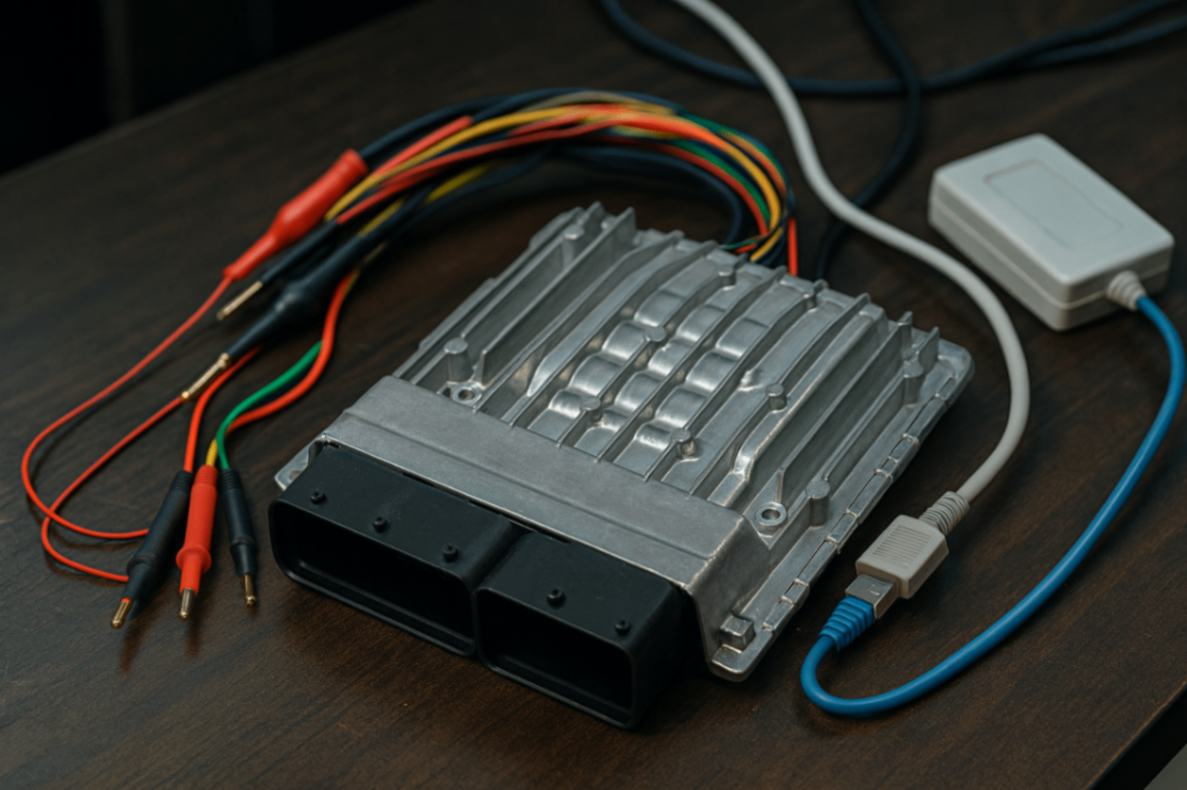 BMW MSV70 DME prepared for bench testing
Why Bench Testing Was Required
When diagnosing a no-start with no MIL, these possibilities all exist:
- The DME isn't booting
- The DME is booting but can't communicate on PT-CAN
- The cluster isn't receiving the MIL command
- The DME isn't completing its internal startup sequence
- The immobilizer handshake is failing
You can't trust any in-vehicle assumptions until you isolate the modules.
Our bench setup included:
- CAS2
- MSV70
- Cluster
- PT-CAN loop
- Manual KL15 + KL87
- Simulated KL50
- Starter-feedback simulation via X60005 pin 13
- Known-good donor DME for comparison
This setup removed all variables except the modules themselves. Fast. Reliable. No guesswork.
What the Bench Revealed
Testing the original DME on the bench showed:
✔ The CAS and DME successfully completed the immobilizer handshake
- CAS pin 28 (KL50 logic) dropped correctly
- DME pin 2 responded
- DME pin 15 (EWS rolling counter line) behaved normally
- ISN match was valid
✔ KL87 supplied correctly
- DME stayed awake on the bench
✘ But PT-CAN startup activity was abnormal
- The DME did not send the initial CAN frame that commands the cluster to illuminate the MIL
That was the key symptom. The DME failed to generate the MIL command, not because CAN wiring was bad, but because the CAN logic inside the DME never fully initialized.
✘ Therefore the engine could not start
- The MSV70 never transitioned into a valid "run-enabled" state, even though EWS was fine
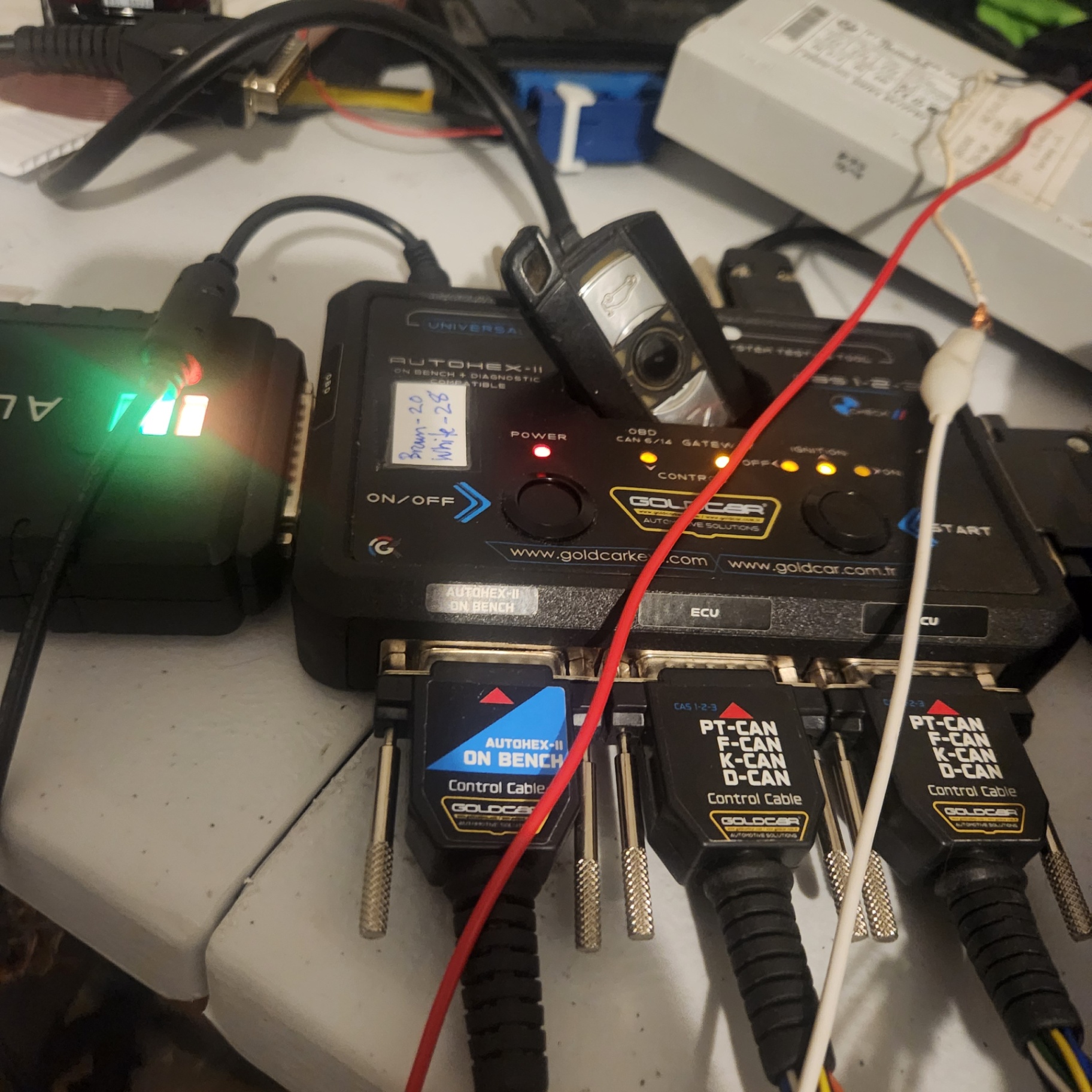 ECU and Module Cloning Bench Setup using Goldcar
Why the Replacement DME Lit the MIL
The donor DME had a different ISN, so:
- It failed EWS
- It would never allow the engine to start
But its internal 5V rail was healthy:
- CAN initialization worked
- It broadcasted the MIL command correctly
- The cluster lit the MIL even though the DME wasn't authorized to run the engine
This is why the donor DME looked "better" even though it was unable to start the car.
Root Cause: Weak 5-Volt Rail
The breakthrough came after correlating CAN behavior with internal power rails.
The original DME showed:
- Partial boot OK
- EWS OK
- Basic diagnostics OK
- KL87 OK
- No MIL frame on CAN
- Incomplete startup sequence
This pattern strongly points to the internal 5-volt subsystem, specifically the regulator that feeds:
- CAN transceiver
- Digital logic required for startup messages
- Internal state machines
- Certain sensor reference circuits
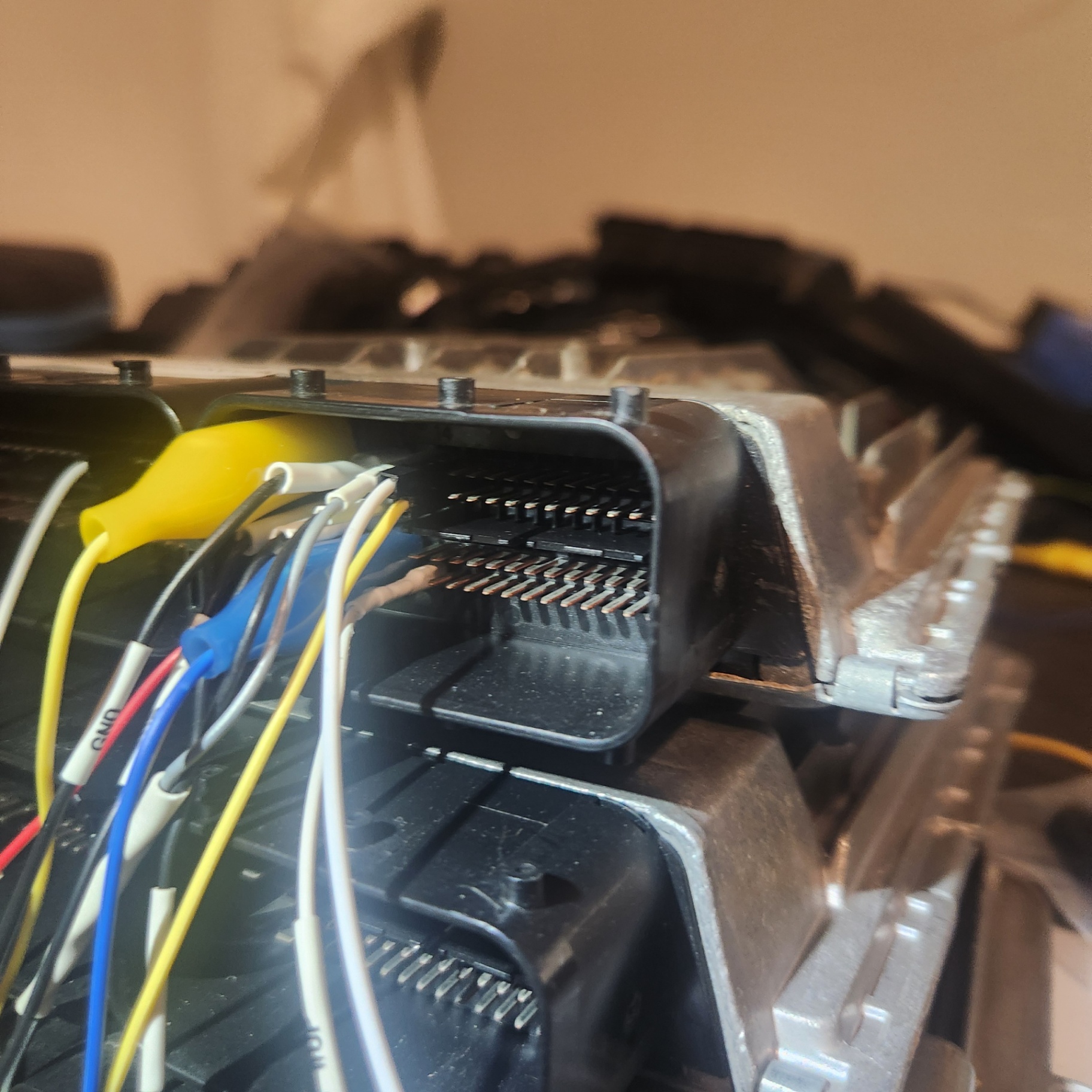 MSV70 pin connections for testing
A degraded 5V rail can still allow:
- Processor startup
- Basic communication
- CAS handshake
But will break:
- CAN initialization
- Engine-start transitions
- MIL commands
- Run-enable logic
This is exactly what happened. The 5V circuit didn't fail "hard." It failed just enough to break the DME's early CAN frames, and that was enough to prevent the MIL from turning on and the engine from starting.
The Fix
We cloned the customer's DME content into a known-good donor DME:
- Flash
- EEPROM
- ISN
- VIN/coding
- All relevant MSV70 data blocks
Fast turnaround. Complete data transfer. No lost information.
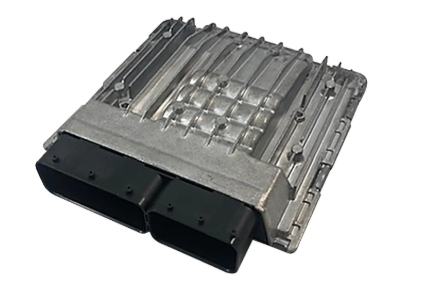 BMW MSV70 DME
After cloning:
- ✔ EWS authorization passed
- ✔ MIL appeared correctly
- ✔ CAN startup sequence was normal
- ✔ The DME entered run-enabled mode
The donor hardware: with its healthy 5-volt rail: resolved the root issue.
What This Case Teaches
A missing MIL does not always mean "CAS problem" or "DME doesn't communicate."
On MSV70:
- The DME can boot partially
- EWS can pass
- Diagnostics can work
- KL87 can be present
- The engine can still refuse to start
- And the MIL can remain dark
All because the DME's 5-volt subsystem is too weak to complete the internal logic that generates the MIL CAN frame.
A donor DME lighting the MIL does not mean the DME is good.
It only means its CAN stack wakes up normally.
A weak internal 5V circuit can break CAN, startup logic, and MIL behavior: without killing the module outright.
This is a classic partial-failure mode in aging MSV70 units.
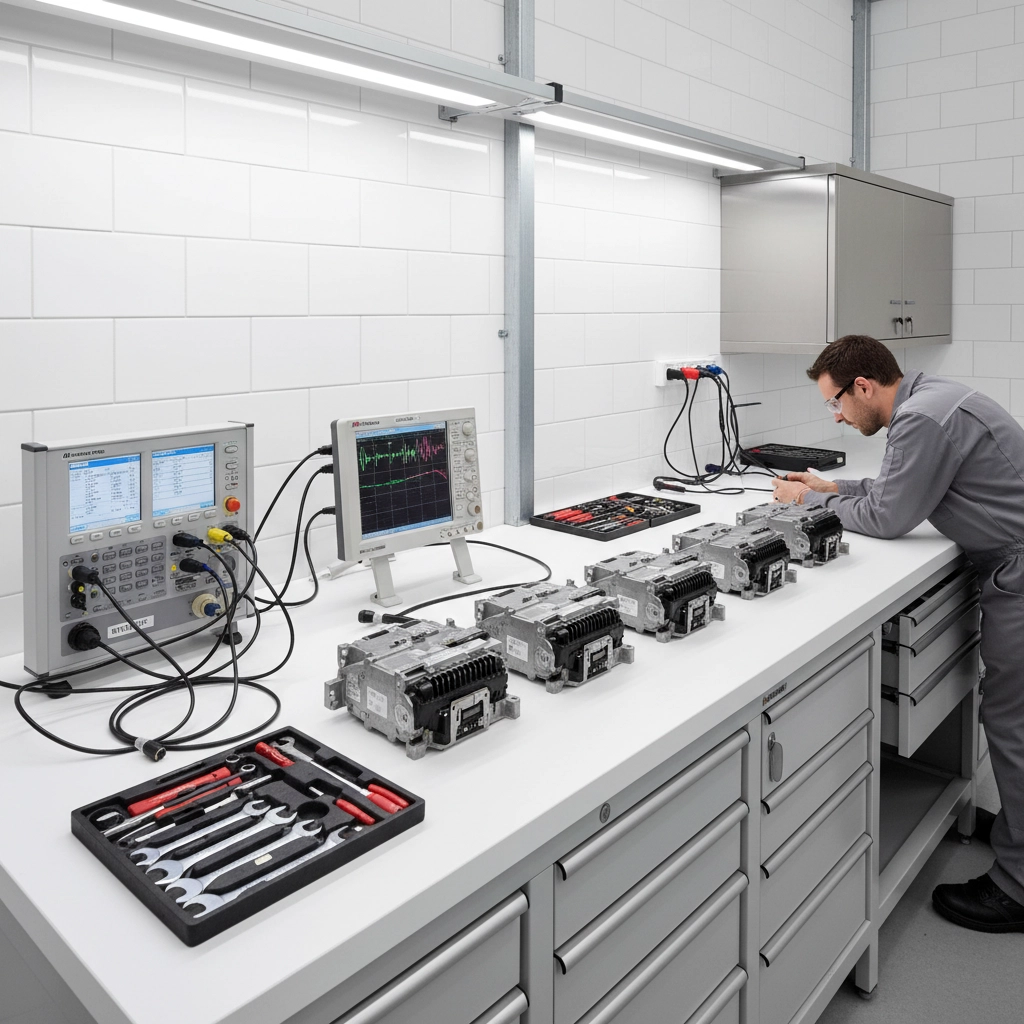 ECU and Module Cloning Bench Setup using Goldcar
Key Diagnostic Points
This diagnosis required:
- Bench isolation
- Comparison with a known-good MSV70
- Monitoring CAS/DME handshake
- Observing CAN behavior
- Understanding the relationship between the 5V rail and CAN startup logic
The root cause: A degraded 5-volt subsystem inside the original MSV70, which prevented CAN startup frames: including the MIL command: and stopped the DME from entering engine-ready state.
The solution: Clone customer's software and ISN into a healthy donor MSV70.
Why Professional Cloning Matters
This case shows why proper DME cloning services are essential. The customer's original programming was intact. The hardware had failed. Professional cloning preserved all the customer's data while resolving the underlying failure.
Fast service. Reliable results. Complete data preservation.
When your MSV70 shows confusing symptoms like this, don't guess. Professional diagnosis and cloning services get you back on the road quickly. Give us a call for expert BMW module cloning and programming services.
Leave a comment